Architecture Department

Programs


Mission

In a rapidly changing world where unprecedented challenges emerge with ever-increasing frequency, the education of an architect must remain adaptive. 

The University of Colorado Denver Department of Architecture fosters the capacity to ask bold questions, take risks, think independently, and approach the work of architecture with curiosity. 

In doing so, we strive to be agile, flexible, visually adept thinkers and makers who contribute to addressing global challenges over a lifetime of active, inquisitive learning. 

Five Goals

These five strategies, developed cooperatively with members of our academic community, will guide us through the next five years:
1. Address societal challenges

What global challenges will intensify in the next three years? Thirty years? What can design do to respond to these challenges?

We must passionately address the systemic, messy, current, and emergent planetary issues we face as a society, and find ways that architecture can have a meaningful impact.

2. Prioritize intellectual engagement

How does the program help to prepare for these challenges? 

We seek to advance the intellectual quality of the Department of Architecture by prioritizing education over vocation. We foreground questioning, risk-taking, synthetic thinking, and analytical judgment. We see technical skills as accruing over time and ever-changing in response to technology and culture. 

In short, we succeed when architecture school lights a fire of curiosity.

3. Foster learning and teaching excellence

How will I learn? How will the curriculum adapt to support me?

Our curriculum evolves continuously through self-reflection, evaluation, and systematic revision measured against tangible results. We grade ourselves as rigorously as we grade our students.

4. Support research and creative work that advances the discipline

How can we foster intellectual, material, and cultural experimentation?

We will advance architecture by exploring new frontiers, creating new knowledge, and sharing with our students emerging developments in the field. We support an ethic of generously sharing, collaborating on, and debating research.

5. Broadcast our work

How will you impact the national and global conversation around architecture? How will you ensure that all this work matters?

Part of our work is to share what we learn by distributing research, creative work, and student work through an active communication program that works with a number of different media platforms.

We will share what we learn and invite the highest caliber, most diverse thinkers to join us.

Architecture Contacts


Kat Vlahos' headshot in black and white.

Kat Vlahos

Professor and Interim Chair
Kevin Hirth portrait

Kevin Hirth

Associate Professor, Director of Undergraduate Studies
Rick Sommerfeld's headshot

Erik Sommerfeld

Associate Professor, Director of Graduate Studies, Director of Design Build Certificate Programs and Initiatives
Jeana Delamarter's headshot

Jeana Delamarter

Manager of Undergraduate Recruitment and K-12 Outreach
Jodi Stock

Jodi Stock

Manager of Graduate Admissions and Recruitment

Accreditation


In the United States, most registration boards require a degree from an accredited professional degree program as a prerequisite for licensure. The National Architectural Accrediting Board (NAAB), which is the sole agency authorized to accredit professional degree programs in architecture offered by institutions with U.S. regional accreditation, recognizes three types of degrees: the Bachelor of Architecture, the Master of Architecture, and the Doctor of Architecture. A program may be granted an eight-year term, an eight-year term with conditions, or a two-year term of continuing accreditation, or a three-year term of initial accreditation, depending on the extent of its conformance with established education standards.

Doctor of Architecture and Master of Architecture degree programs may require a non-accredited undergraduate degree in architecture for admission. However, the non-accredited degree is not, by itself, recognized as an accredited degree.

The University of Colorado Denver, Department of Architecture offers the following NAAB-accredited degree programs:

  • Master of Architecture Four Studio Track (non-accredited undergraduate degree in architecture + 60 credits)
  • Master of Architecture Six Studio Track (non-architectural undergraduate degree + 105 credits)

The University of Colorado Denver, Department of Architecture Master of Architecture program was granted an eight-year term with conditions in 2023. The next accreditation visit will take place in 2031.

Department News


Rick Sommerfeld on a screen at a movie premiere for Living on the Edge in a theater with an audience.

ColoradoBuildingWorkshop Celebrates of Year of Awards and Global Recognition

The ColoradoBuildingWorkshop, CU Denver’s acclaimed design build certificate program is celebrating a banner year of national recognition and meaningful community engagement. Highlights include the premiere of Building on the Edge, participation in the American Pavilion at the Venice Biennale, and multiple awards. The Colorado Building Workshop continues to reinforce its role in designing with purpose and paving the way for future generations of architects.


Architecture Assistant Professor Alex Yueyan Li’s Firm Wins The League Prize for Young Architects + Designers.

Architecture Assistant Professor Alex Yueyan Li’s Firm Wins The League Prize for Young Architects + Designers

The Architecture League of New York awarded Assistant Professor Alex Yueyan Li and Mahsa Malek, co-founders of 11 x 17The League Prize for Young Architects + Designers for 2025. 11 x 17 is a research-driven design practice based in North America with offices in Denver and Toronto. Their practice produces works across multiple scales—exhibitions, installations, furniture, interiors, books, and buildings.


Hunter Carey's headshot while he works on a sketch at a drafting table in the architecture studio.

From the Slopes to the Studio: Professional Skier Turned Architect-in-the-Making

Growing up in the mountain town of Winter Park, Hunter Carey’s life was all about skiing. So much so, that he became a professional skier at the age of 15, joined the U.S. Ski Team, and traveled the world for trainings and competitions. His talent in park and halfpipe, also known as freestyle skiing, earned him a silver medal in the Youth Olympics and three national championship titles. “I wanted to be in Colorado because of the mountains, skiing, and family, and CU Denver had the architecture program,” said Carey.
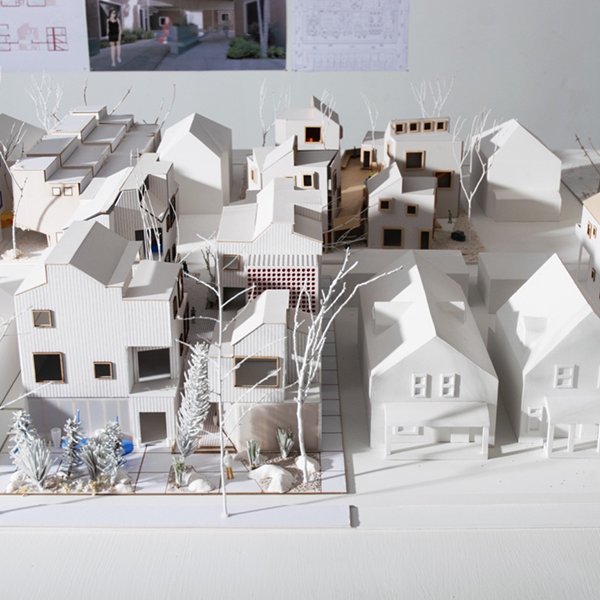

A group of housing models.

Assistant Professor Leyuan Li Wins Second Consecutive Housing Design Education Award

For the second year in a row, Assistant Professor Leyuan Li received the ACSA/AIA Housing Design Education Award, recognizing his innovative approach to his Spring 2024 studio, which explored shared housing and community-oriented design.


Containers with dried petals and flowers.

Professor Julee Herdt’s Research and Innovations Guide the Future of Green Building Materials

An innovator of green building technology, Professor Julee Herdt has dedicated her career to advancing sustainable design and material innovation. As a faculty member at the University of Colorado Denver’s College of Architecture and Planning, she has led groundbreaking work in eco-friendly building technologies, including the development of high-performance, recycled-material construction systems.
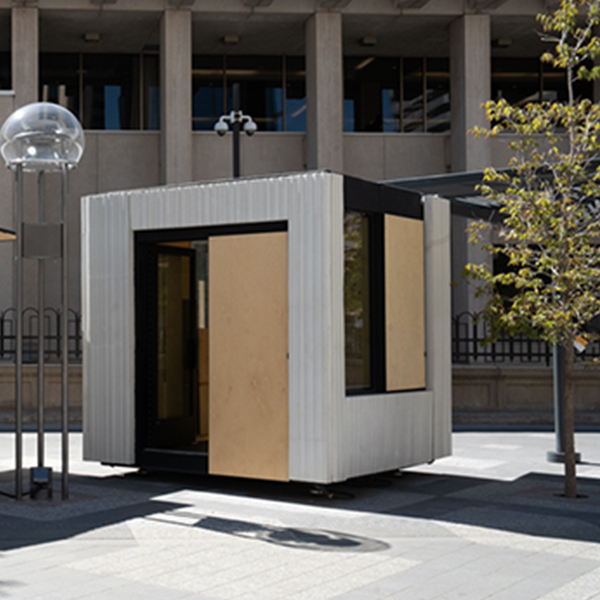

The exterior of a kiosk located along the 16th Street Mall.

Design Build Certificate Student Work Featured at Denver’s 16th Street Mall

Student work is now a prominent feature along Denver’s 16th Street Mall courtesy of the 2023-24 cohort of the ColoradoBuildingWorkshop. As part of their project, sponsored by the Downtown Denver Partnership, students designed and built four kiosks aimed at helping emerging businesses take their first steps toward brick-and-mortar success. These kiosks serve as functional prototypes and will contribute to the revitalization efforts underway on the 16th Street Mall, further energizing this iconic public space.
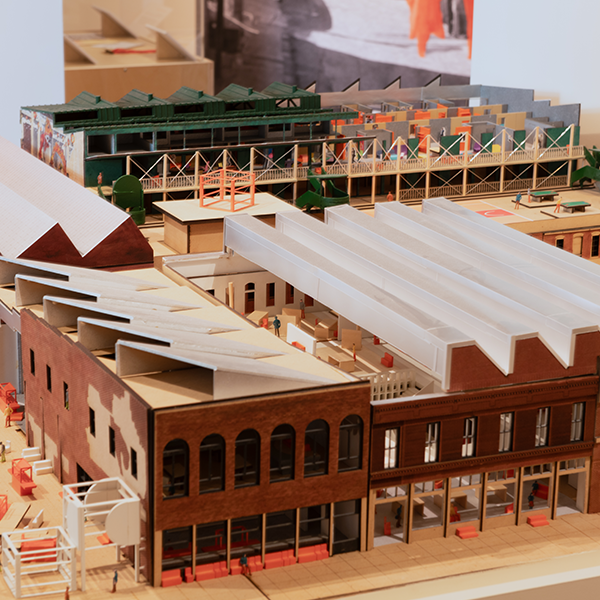

A model of Denver's Chinatown from above the building.

Where is Denver's Chinatown? Assistant Professor Leyuan Li's Studio Addresses a Missing Piece of Denver's History

The exhibition Where is Denver’s Chinatown? Stories Remembered, Reclaimed, Reimagined is a collaboration with History Colorado, Colorado Asian Pacific United (CAPU), and Assistant Professor Leyuan Li at CU Denver's College of Architecture and Planning. The exhibition features a series of installations and graphics designed by Li and his team. It also showcases drawings and models produced by CAP students from Li’s fall 2023 architecture studio “The Suppressed Interior,” representing their ideas of repurposing existing buildings in the former Chinatown neighborhood and proposing spatial possibilities for Denver's future Chinatown.
College of Architecture and Planning

CU Denver

CU Denver Building

1250 14th Street

2000

Denver, CO 80202


303-315-1000

CMS Login