

A Green Corridor Plan Comes to Life in Santiago, Chile
Cassa Niedringhaus Aug 25, 2026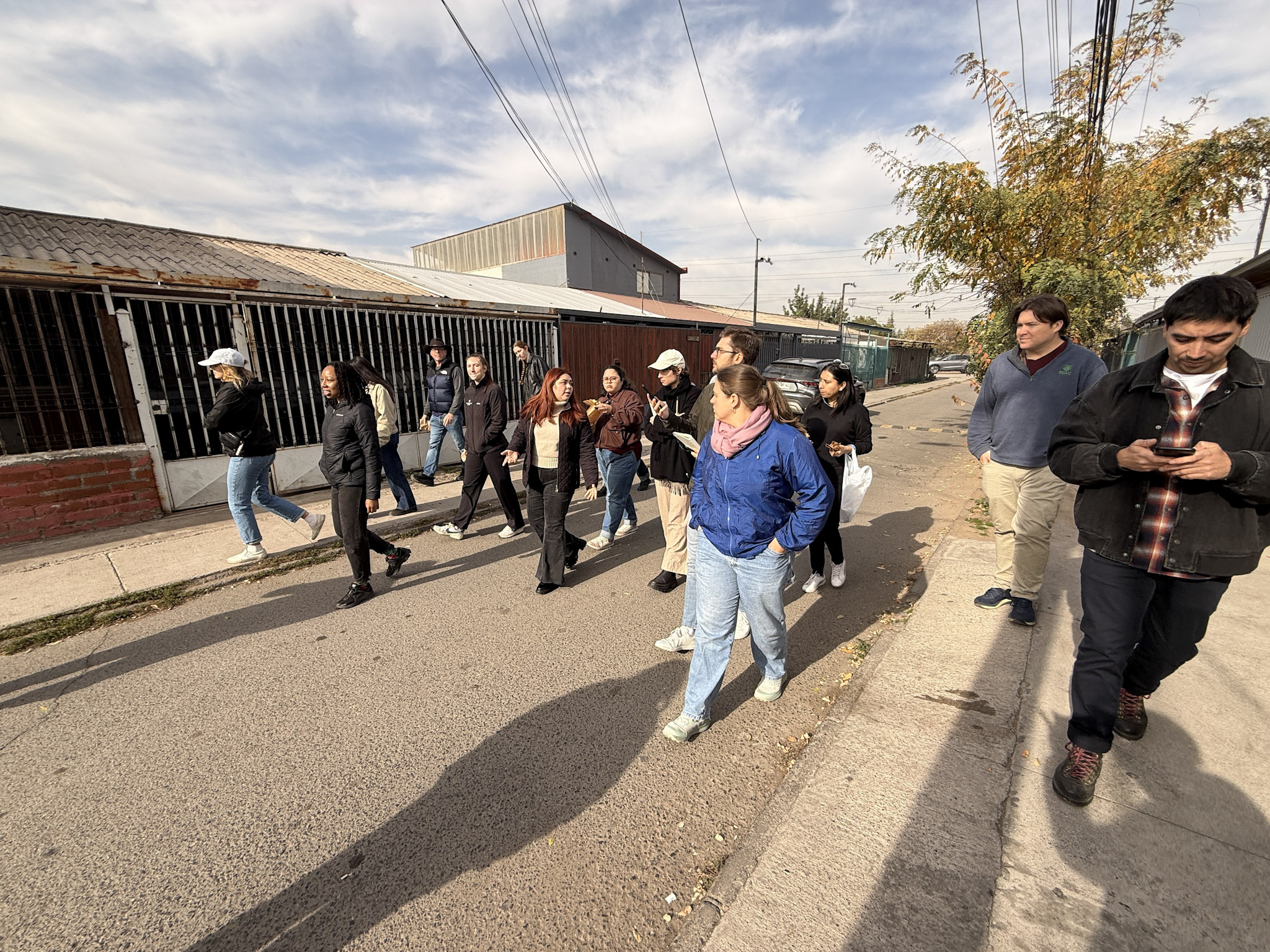
A corridor through Lo Espejo—a municipality in Santiago, Chile—offers an opportunity to increase connectivity and community.
For their 2026 Public Spaces Studio, students from the College of Architecture and Planning at CU Denver traveled to Santiago and worked in collaboration with local public officers and community members to prepare a plan for a new urban greenway known as the Corredor Biológico Salvador Allende.
The plan defines a vision for the corridor as a major connector with enhanced pedestrian and bicycle infrastructure, improved greening strategies, and curated play and public art elements. This includes a multi-use trail, as well as new vegetation and other green infrastructure to reduce surface temperatures, mitigate flood impacts, and support habitat connectivity for wildlife.
In May and June, CU Denver students pursuing a master of urban and regional planning (MURP) and master of urban design (MUD) conducted public space surveys, collected field notes, met with local officials, and solicited feedback from residents to develop the plan. They also collaborated with faculty from University of Chile’s Facultad de Arquitectura y Urbanismo.
This plan will fill a critical gap in the region’s broader green infrastructure plan, said Professor of Urban and Regional Planning Austin Troy, PhD, who served as one of three instructors on the trip. It gave students a chance to get real-world experience, too.
“The students were able to design for a large area with such a rigorous level of detail,” Troy said. “I was amazed by their creativity in coming up with design and programming choices for the space and finding ways to make thematic areas of the site transition logically across space.”
Troy added that students and faculty found the opportunity to connect with locals to be one of the most rewarding parts of the studio.
“It was rewarding to work with the staff and community members from Lo Espejo, none of whom spoke English, but all of whom were incredibly welcoming, friendly and generous with their time,” Troy said.
The final Corredor Biológico Salvador Allende Design plan, presented by the students at the end of the four-week study abroad, can be used by the Lo Espejo community as they seek funding to bring their proposals to fruition. Learn more about this and other global education opportunities by visiting the Office of Global Education.