

Student Spotlight: Peyton Robbins
Amanda Spidel | Department of Urban and Regional Planning Mar 16, 2026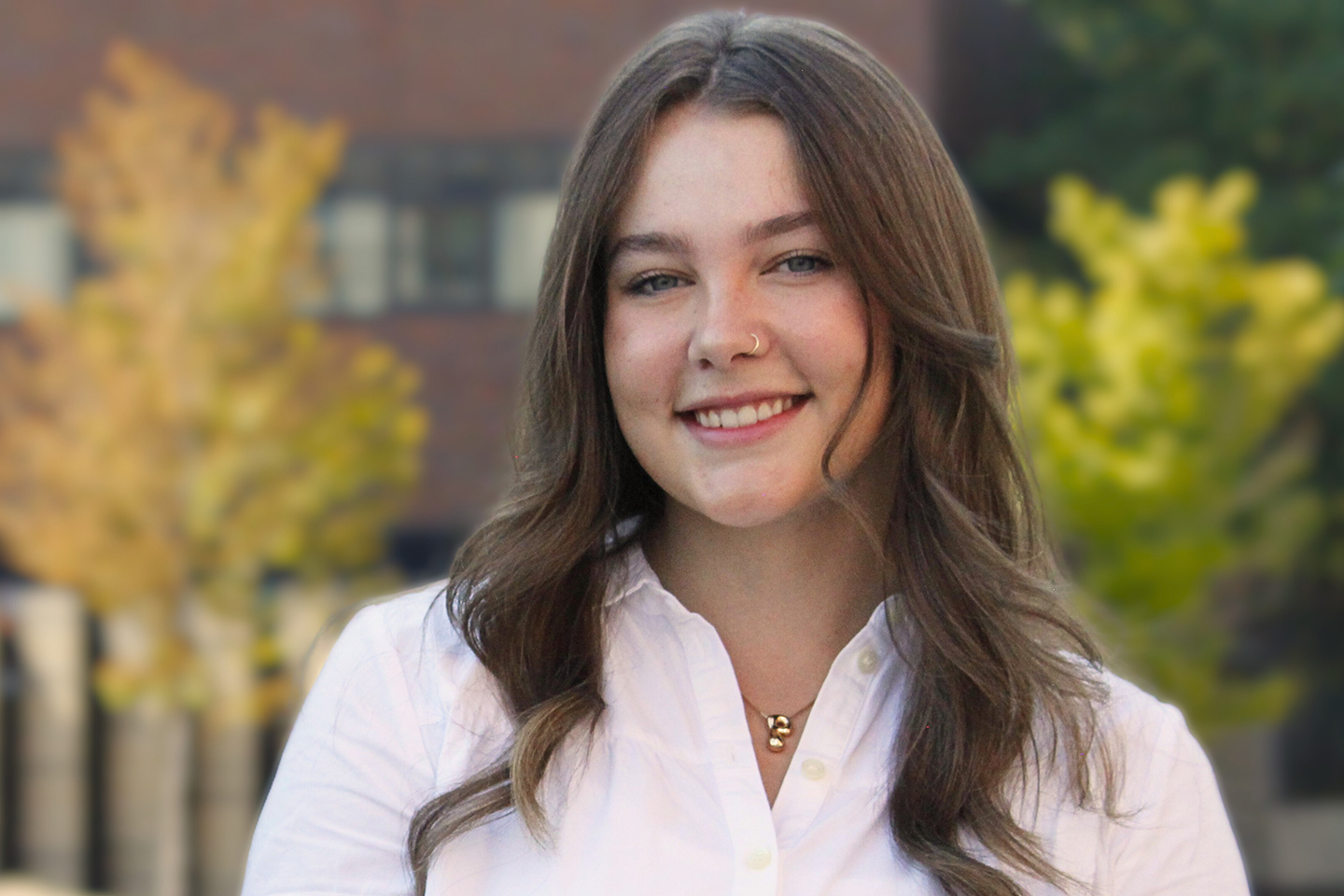
Peyton Robbins earned her undergraduate degree in urban community and regional planning at the University of Washington before attending CU Denver to complete her master of urban and regional planning degree. Peyton received Colorado Housing and Finance Authority (CHFA) Scholarship at CU Denver, and since starting her master’s program, and has had hands-on experiences in the planning realm taking on roles as a planning technician for Boulder County, interning with the City and County of Denver as a neighborhood planning and regulatory intern, and working at Confluence as a planning intern.
Amanda Spidel, a current master of urban and regional planning (MURP) student, interviewed Peyton Robbins, to expand on her perspective as a current student preparing for a career in urban planning.
Q: What made you decide to go into urban planning in the first place?
My path into planning really started long before I knew what planning was. “My parents were both architects by trade, so we were always going and looking at model homes… everywhere we went, that was the focus.” Growing up around design shaped the way I saw the world. I was always paying attention to how spaces worked, how people moved through them, and how the built environment influenced daily life.
When I got to college, I realized architecture wasn’t quite the right fit. I loved design, but the highly detailed, technical side didn’t feel like where I wanted to be. Then I discovered planning. I took my first planning class and immediately felt like I’d found the missing piece, something that blended creativity, systems thinking, and community impact. Planning felt like “a puzzle trying to put everything together,” and that challenge drew me in.
Q: Why did you pick this program over others?
I applied to a lot of programs because I wasn’t totally sure where I wanted to land. But as I got closer to deciding, I realized how much I wanted to come home. I loved Seattle and learned so much there, but it felt a little bit impersonal to me. I wanted to take what I was learning and apply it somewhere that mattered deeply to me, somewhere I understood on a personal level. Denver is that place. I grew up nearby, and I knew that if I wanted to work in Denver, studying here would give me the strongest foundation. That instinct has been completely validated.
One of the biggest draws was the Mountain Studio. I was really interested in mountain planning and housing issues in mountain communities, so the chance to study those topics in a hands‑on way was huge. It ended up being exactly what I hoped for.
Q: What has been your favorite class or project so far?
Every semester, I think I’ve found my new favorite class, but the one that stands out the most is Real Estate Development Finance with Megan and Mary. It was “easily the hardest class and project” I’ve done in my entire college career, but also the most rewarding. We partnered with Tierra Colectiva, a community land trust, on a site near the National Western Center. Our task was to propose a program for the site and figure out how to fund it, especially through alternatives to traditional financing. They were interested in exploring “non‑LIHTC options,” which pushed us to think creatively about funding mechanisms.
The project required balancing financial feasibility with community needs, “trying to design through that lens was really critical.” It stretched me in ways I didn’t expect, from deep financial modeling to thinking about equity, justice, and the impacts of I‑70 on the surrounding neighborhood. Seeing everything come together in the final proposal was one of the most satisfying moments of my graduate experience.
Q: What’s something about planning school that surprised you?
The sheer diversity of perspectives. Even though I came in with a planning undergrad, which is pretty rare, I was still surprised by how many different backgrounds, interests, and experiences people brought into the program. All of the different perspectives really surprised me.
Some people are passionate about transit, others about housing, others about environmental planning or community engagement. That mix has made me a better planner. I’ve learned so much from classmates who see the world differently than I do, and it’s pushed me to think more broadly and more critically.
Q: How would you describe the vibe of your program?
Passionate. That’s the word that comes to mind immediately. Everyone’s passionate about it. It’s inspiring to be surrounded by people who care deeply about their niche, whether that’s transportation, housing, sustainability, or something else entirely. Being in a space where everyone is energized by the same big questions makes the program feel collaborative, motivating, and genuinely fun.
Q: Have you had any internships or hands‑on experiences? What were they like?
I’ve had several. My first was through Boulder County as a planning tech. I learned how reviewers think and how different agencies—the school district, fire department, environmental review—fit together. Then, I worked for the City of Denver with their Neighborhood Planning team. This was my first experience with long‑range planning and community‑scale work. My newest role is at a consulting firm as a planning intern, and it has given me another perspective on how planning happens through the private sector. Together, they helped me understand planning at the county, city, and consulting levels.
Q: What skills have you gained since starting the program?
So many. On the technical side, GIS [geographic information systems] has been the biggest one. I did not do GIS in my undergrad, so learning it through my internships and projects has been something I’m really proud of. It’s become one of my favorite tools. Beyond that, I’ve grown a lot in collaboration, communication, and perspective‑taking. Being able to change my thinking or think about something from a new perspective has been one of the most valuable skills I’ve developed, and one that I know will shape my career.
Q: How does your program connect you to the local community?
In more ways than I expected. Almost every single class I’ve taken has involved a real-world project. That means we’re constantly engaging with Denver, its neighbors, its challenges, and its opportunities.
The faculty are deeply connected to the planning world here, and they bring in guest speakers who are doing incredible work. I leave class feeling energized because it’s so clear how what we’re learning connects to real issues in the city.
Q: What advice would you give someone thinking about going into urban planning?
Come in with an open mind. People often enter planning because of one specific interest—transportation, housing, sustainability—but once you’re here, you realize how interconnected everything is. Expose yourself to as many areas as you can.
And don’t overlook planning theory. I love the history and foundations of planning, and I think understanding where we have come from is essential to understanding where we’re going.
Q: What resources or support systems have been most valuable?
My peers, without a doubt. We’ve created such a good support system, which is so important during such a challenging and unique period of life. We share resources, job postings, readings…everything.
The career team has also been incredible; that’s how I found my current job. And the faculty, especially adjuncts who are actively working in the field, have been amazing mentors.
Q: Looking back, is there anything you wish you had known before starting graduate school?
I wish I had known how much fun I was going to have. I came in with the usual imposter syndrome, “Am I qualified for this?” but looking back now, I know my past self would be so proud of where I am. It’s been challenging, but also incredibly rewarding.