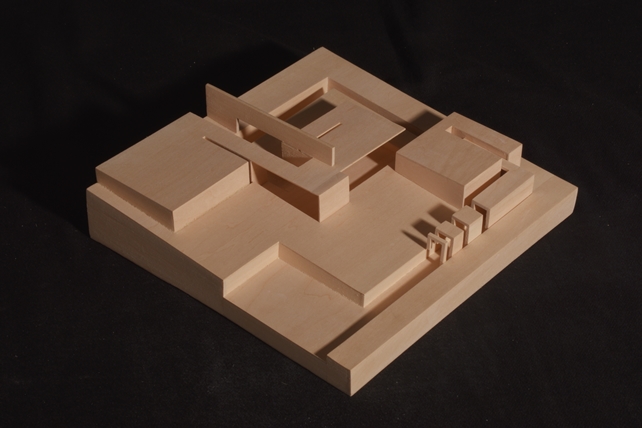
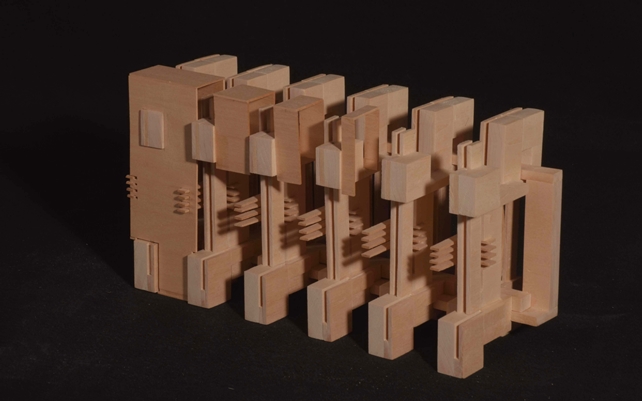
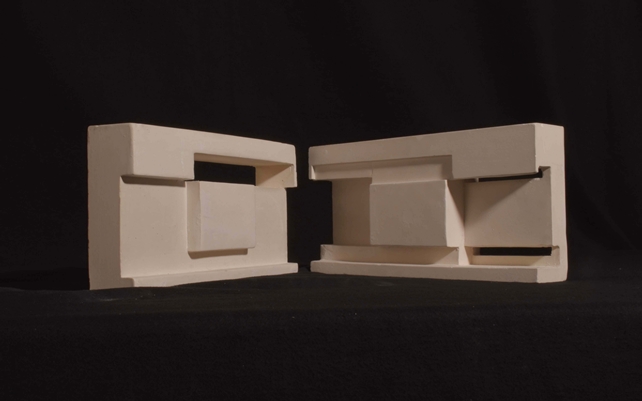
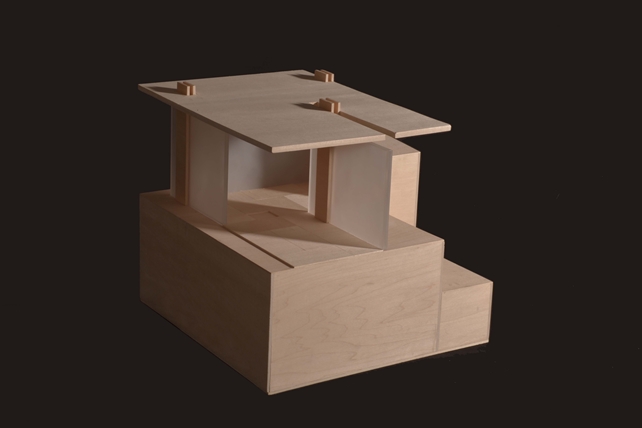
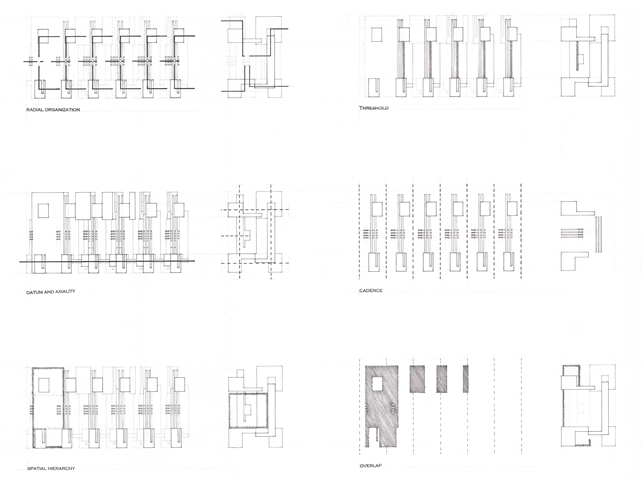
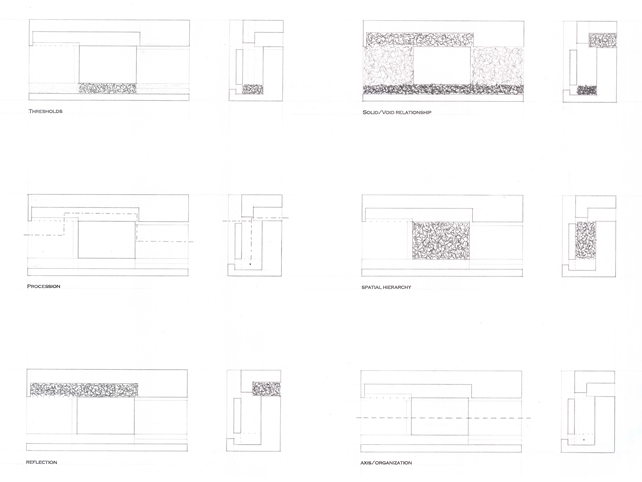
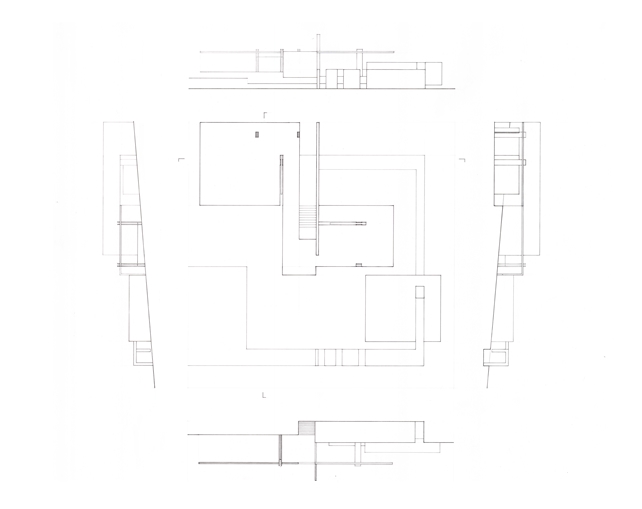
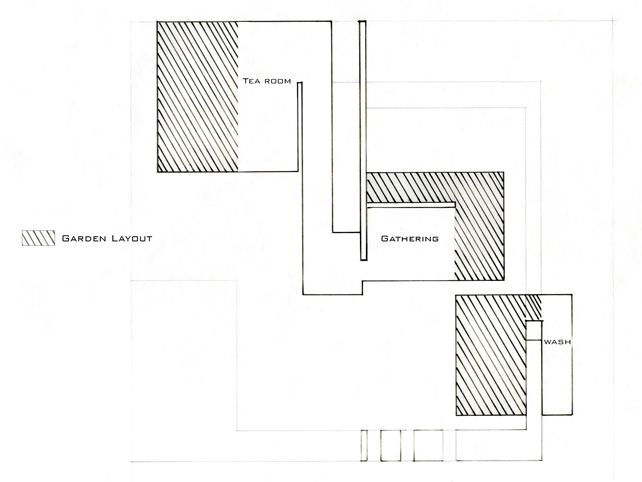
The tea house was created in response to the ever-growing popularity of the tea ceremony, primarily in Asian cultures. With the design of the tea house, I focused on the transitional experience and the formulation of a sacred space that creates a profound bond amongst participants and the site. I employed two primary design strategies: radial organization and interlocking connections.
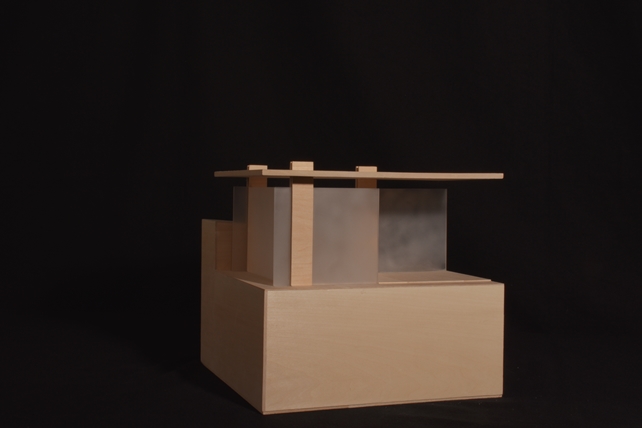
The beginning of the path is marked by an initial threshold created by progressively increasing overhead wrapping conditions that create bands of light. The initial turn reveals a small garden, with a washbasin giving the user a space for contemplation and symbolizing the purifying of the body. Following along the path, the second turn reveals the forthcoming of the tea room marked by an elongated overhead plane. Continuing along the path, the last turn seamlessly brings you up the stairs where you see the Tokonoma and are guided to the gathering area to await the host. The tea room consists of the preparation area (known as Mizuya), the hearth, and the surrounding garden to create an intimate connection between the host, the guests, and nature.